LINE UP!
By: Amanda Nye
Description of Activity
Line Up is an activity a teacher can do with young children ages 3-8. How this activity works is the teacher tapes a giant sheet of construction paper up on a wall and then has the children stand in a line with their backs against the wall. The teacher then takes a marker and outlines the bodies of the children. Once this is the done, the children then decide if they can tell who is who and color their own body in to look like them. They can use drawing utensils such as markers, crayons, colored pencils, or paint to draw in their face, clothes, hair and anything else about their appearance. After all of this, you have a beautiful mural of the children to hang up!
Materials Needed:
- White construction paper long and wide enough to fit all the children
- Tape
- Black marker
- crayons
- paint/paint brushes
- colored pencils
- color markers
This activity will help children learn the similarities and differences between each other, while also giving children the pleasure of seeing themselves represented in the classroom. This activity will also give teachers the insight into how the children see themselves. Teachers can propose questions such as:
- "How do you know this outline is you?"
- "How are the outlines of people similar?"
- "How are they different?"
- "What do the outlines tell you about yourself?"
- "What do the outlines tell you about someone else?"
Goals of This Activity
- Provide children with a positive experience exploring similarities and differences
- Recognize, appreciate, and respect the uniqueness, beauty, value, and contribution of each child
- Foster positive self- esteem and a positive self- concept in children
- Promote respect towards others
- Help children to be group members
- Help children live happily and cooperatively in a diverse world
- Encourage children to respect other cultures
- Increase children's ability to interact, talk and play with people who are different from them
These goals are connected to this activity because this activity gives children the visual of themselves and others. By children seeing their outline with everyone in the beginning shows how everyone is similar and that we really aren'y much different than everyone else. When it is time for the children to color themselves in, they will realize and understand that is is our features like skin color, hair, eyes, clothing, and beauty that makes us all unique and different. This will teach children the tolerance of others and show children to respect each others uniqueness. Also while working, children will be able to comment and interact with each other on a different level and talk about what makes them similar and different. When the mural is done, it promotes a sense of community and working together and how each person is important. It gives each child positive self- esteem to see them represented in the classroom in the way they want to be seen.
I chose this activity because I think it's a great way for children to express who they are. It's a visual so it helps children (especially 3-4 who are egocentric) see how others look and how people should work other. It also gives teachers an insight into how the children see themselves. I think this activity works for all ages 3-8 because children who are younger can visually see the similarities and differences. Children ages 3-4 are especially good about noticing differences, so them seeing similarities amongst themselves will help them respect each other (Roots and Wings, 11). As the child reaches 5 and 6, many children at this age appreciate differences in heritage and will like seeing the differences amongst their classmates (Roots and Wings, 18). Ages 7-8 realize physical differences will change but that doesn't mean the person will actually change (Roots and Wings, 19). This activity will give them a platform to talk about bigger similarities and differences such as race, gender, and culture.
I believe this theme is important because it shows diversity amongst children and encourages respect and tolerance of each other.
Multicultural Concepts Presented in this Activity
- Everyone is worthy
- Everyone is lovable
- Everyone is equal
- Everyone deserves respect
- Everyone is important
- People are similar
- People are different
- Some physical attributes stay the same and some change
- Many different people live in our community
- There are different kinds of people/ families
- People work together and help one another
Extensions of this Activity
Not only would I love to do this activity in my own classroom some day, but I would love to modify and add on to this idea! One suggestion would be to have the children write on their bodies characteristics and traits about themselves that they are proud of. Also, they could write what type of cultural background they have and something people didn't know about them!

"Shapesville" by Andy Mills, is one book I found for children that encourages children positive body diversity and shows how people of diverse cultures can be friends and work together. "Shapesville" is about 5 friends of all different shapes and sizes and that have a unique talent. All 5 friends work together and go on adventure. I chose this book because I think it is a fun book with silly characters, but it teaches children to not judge someone by how they look and that it matters what is on the inside of a person.
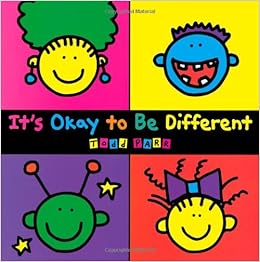
"Its Okay to Be Different" by Todd Parr, is a great book for children because it lists a bunch of unique qualities that children do. I chose this book because it boosts self- esteem for children and encourages children to be proud of what makes them different. It gives children light to different things they maybe thought weren't okay and teaches children to embrace the differences amongst each other.
References:
"Roots and Wings: Affirming Culture in Early Childhood Programs" pgs: 212-213, 11-19
Amazon: Children Books
